

Optimizing Safety in the Petrochemical Industry Lubricant Supply Chain
Master industrial lubricant supply chain safety. Discover how digital intelligence and puncture-proof engineering ensure a resilient operation for lubricants.

The safety profile of the lubricant supply chain is defined by a fundamental equation: while base oils and lubricants require controlled handling, the true magnitude of risk is largely influenced by the degree of human and environmental exposure. In an industry where a single minor leak can escalate into a significant operational or compliance failure, achieving low-risk status demands continuous vigilance. This mindset shifts the focus from merely reacting to incidents to architecting a supply chain built around containment and controlled transfer. Given that the chemical complexity of specialized lubricants requires a standard of care far exceeding that of standard bulk goods, the infrastructure must be as sophisticated as the chemistry it protects.
By adopting a strategy of total containment, businesses can exert precise control over product movement and maintain material stability throughout manufacturing, storage, and transit. This level of isolation helps preserve chemical properties while supporting safe and consistent handling practices. Goodpack’s industrial chemical packaging solutions serve as the structural backbone of this precautionary philosophy, providing the durability and reliability required to translate safety protocols into dependable performance across global logistics networks. Through its resilient design, the system supports stable handling across diverse transport conditions, ensuring that high-value lubricants safely move from refinery to end-user with maintained product integrity and operational consistency.
Structural Containment and Property Preservation
Preserving the chemical integrity of base oils and modern lubricants requires a containment system that combines structural rigidity with controlled handling. High-performance base oils and lubricants are often sensitive to external stressors; any exposure to moisture, particulate matter, or oxygen can trigger oxidation and degradation. Consequently, protecting these fluids from contamination, leakage, and unnecessary exposure throughout the logistics cycle is essential to ensuring they meet the stringent performance specifications required by manufacturers, blenders and end users.
To achieve this level of protection, businesses must look beyond the limitations of traditional plastic and adopt a multi-layered containment strategy. Central to this approach is Goodpack’s reusable intermediate bulk container solution, engineered with a galvanized steel frame that enhances structural strength and long-term durability. This structural barrier ensures that even under extreme industrial duress, such as high-velocity collisions, the payload remains secure and the risk of environmental exposure is neutralized. This structural resilience is further enhanced by specialized internal liners that act as a secondary defense, hermetically sealing the product to eliminate the risk of micro-leaks and environmental contamination that can occur during long-term storage or aggressive transit.
By integrating these robust materials, the system provides a standardized yet flexible solution capable of supporting a vast spectrum of viscosities and chemical profiles, meeting the diverse and evolving needs of the lubricant logistics sector with unwavering reliability.
Operational Safety During Loading and Unloading
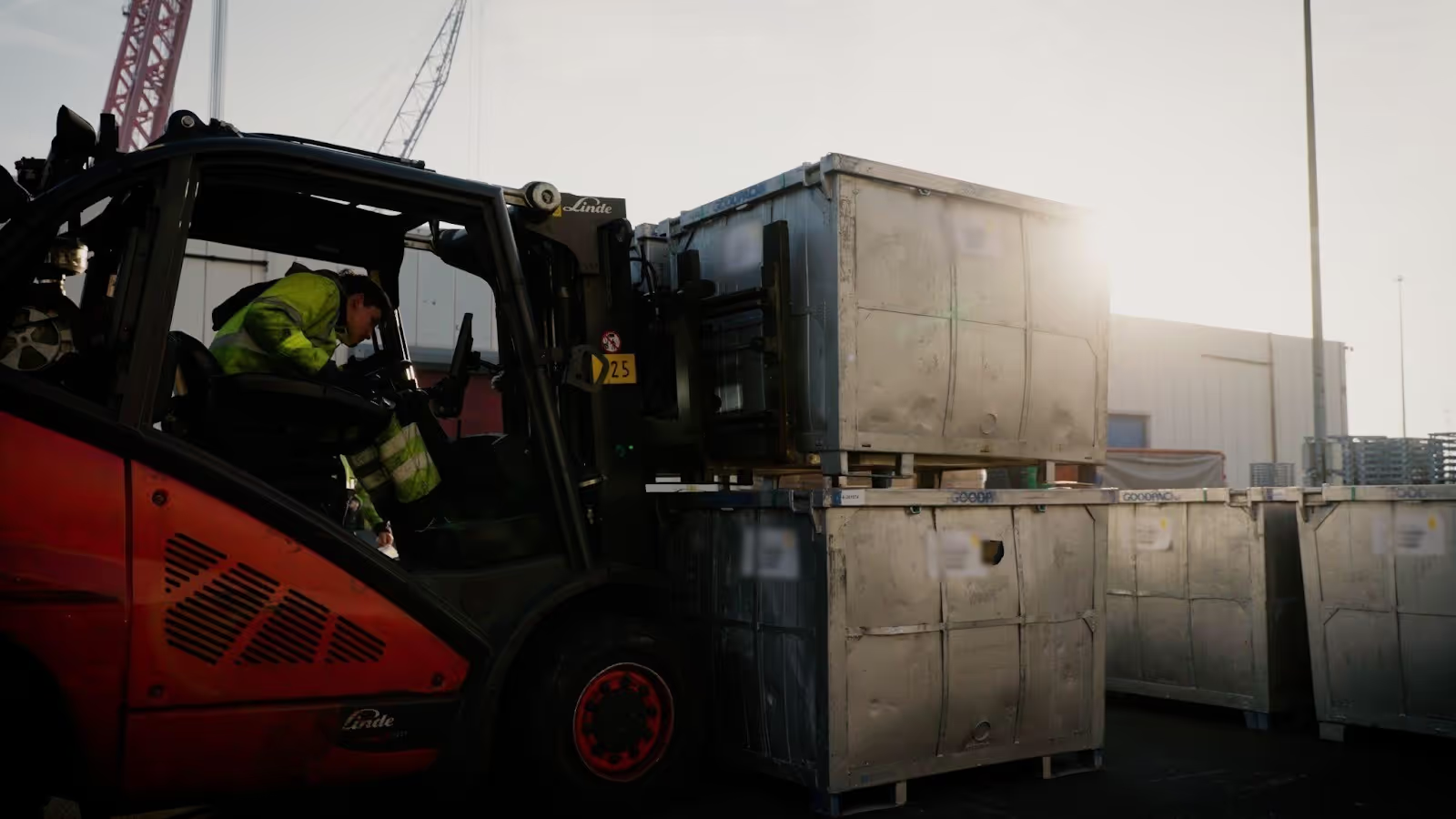
The transition of lubricants from storage to the production floor represents an operational window where process discipline and handling accuracy are essential. True operational safety relies on a workforce that is not only equipped with site-specific PPE, such as specialized gloves and eye protection, but is also deeply trained in proper handling procedures to prevent leaks, contamination, or product loss. This human element remains vital, as a well-prepared team serves as the first line of defense. However, even the most skilled team requires engineered safeguards to mitigate the physical risks associated with high-density bulk liquids. Administrative controls must be reinforced by robust engineering, designed to eliminate the margin for error during high-traffic maneuvers.
Goodpack addresses these environmental and physical risks through its proprietary stacking pin system, which ensures precise vertical alignment to create a stable, "locked-in" column that maintains stability during both static storage and rapid transit. By eliminating the risk of misalignment or load shifting in high-traffic warehouse environments, the system provides a secure structural foundation. This structural integrity is further complemented by specialized liquid-handling accessories, including precision IBC taps and dedicated discharge liners, that support a controlled and efficient transfer process.
By enabling such precision-controlled movement, the system facilitates smooth and safe transfer of the payload from the container to its destination while reducing the need for manual intervention. This results in an operational workflow where safety is integrated into the hardware itself, reducing the burden on the workforce while supporting a controlled handling environment that protects both the operator and the product.
Digital Asset Tracking
In the modern supply chain, physical durability must be complemented by digital visibility to reduce blind spots and enhance asset control. Maintaining shipment integrity requires accurate, data-driven tracking, enabling logistics teams to monitor asset movement and make informed planning decisions across each stage of the journey. This level of oversight transforms the supply chain from a series of disconnected movements into a transparent, data-driven flow—a transformation made possible by embedding a unique digital fingerprint into every Goodpack asset.
Goodpack’s integrated RFID tagging system enables seamless tracking across the global logistics network. By capturing movement data at key checkpoints, the system provides structured visibility that removes the errors and delays associated with manual record-keeping. This digital layer significantly improves operational coordination, allowing for more precise inventory management and the rapid identification of idle or underutilized assets based on their specific functional type and regional demand.
By connecting the physical container to a centralized digital record, Goodpack enables stronger asset accountability. This connectivity supports optimized fleet utilization, improved supply chain forecasting, ensuring that the highest standards of regulatory compliance are upheld across the entire base oil and industrial lubricant logistics. Through this data-driven approach, businesses gain greater control over their packaging assets, enhancing operational efficiency and maintaining a responsive, streamlined supply chain that is ready for the demands of a digital-first industry.
Resilience Through Robust Packaging
In industrial lubricant logistics, safety is the primary engine of cost-efficiency and the ultimate protector of brand reputation. Because disruptions, such as product loss, contamination, or handling inefficiencies, can create unnecessary operational strain and long-term financial liability, the adoption of high-quality packaging is a non-negotiable strategic investment.
The synergy between Goodpack’s durable steel IBCs, advanced digital tracking, and specialized liquid-handling accessories provides businesses with an unparalleled level of oversight. This integrated approach enhances structural stability, traceability, and transfer precision, supporting a more controlled and transparent logistics process.
By offloading the burden of container maintenance and lifecycle management to a trusted global partner like Goodpack, companies can redirect their internal resources toward innovation and core production. Ultimately, those who leverage this robust infrastructure benefit from enhanced brand reputation, superior regulatory compliance, and a resilient operational framework that is perfectly positioned to scale in an increasingly demanding global market.
References
Canada, H. (2020a). Base oils - information sheet - Canada.ca. Canada.ca. https://www.canada.ca/en/health-canada/services/chemical-substances/fact-sheets/chemicals-glance/base-oils.html


