

Sustainable Supply Chain Packaging: What It Means for Industrial Operations
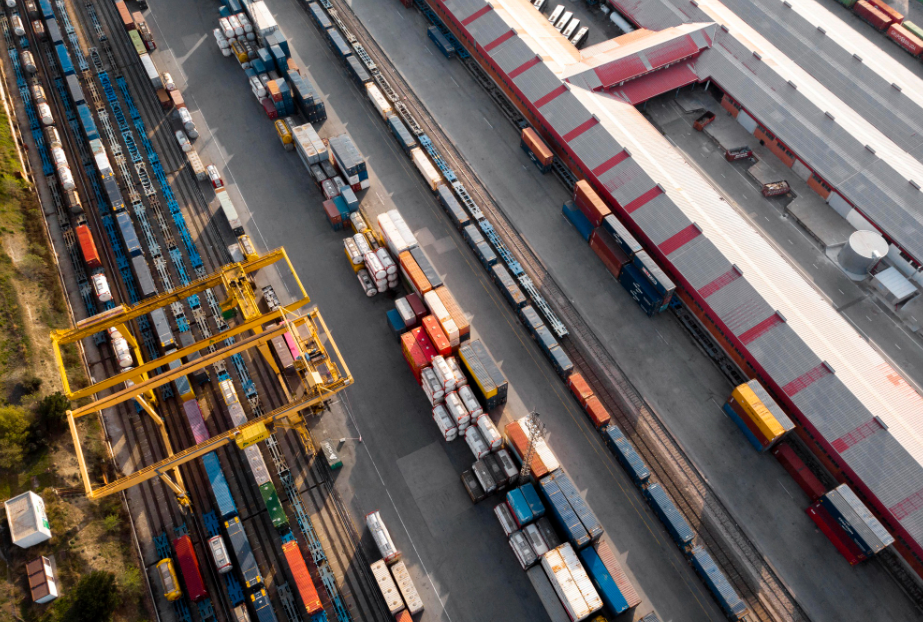
Most of the conversation about sustainable packaging concerns what consumers see: recyclable cartons, compostable mailers, less plastic on retail shelves. Sustainable supply chain packaging operates in a different arena. It covers the containers and bulk formats that carry industrial goods, from rubber and non-hazardous chemicals to automotive components and bulk food ingredients, across road, rail, and sea. End consumers never see these formats. Yet they account for a substantial share of the packaging waste, cost, and emissions generated by global trade.
The conversation around industrial packaging is increasingly being shaped by practical realities: regulatory timelines, customer scrutiny, and the accumulating cost pressure of single-use models. The more consequential question is what sustainability means at industrial scale, and which approaches withstand operational examination and can deliver meaningful improvements in practice.
What Sustainable Supply Chain Packaging Means in an Industrial Context
In an industrial context, sustainable supply chain packaging refers to the decisions made across sourcing, use, and end-of-life that reduce waste and emissions in business-to-business, multi-trip shipping. The factors that define sustainability in industrial packaging differ from those typically considered in retail packaging. Retail packaging answers to materials, branding, and consumer perception; its sustainability is largely shaped by appearance, composition and recyclability. Industrial packaging answers to a different standard entirely: durability, structural integrity, and the number of trips a container completes before its service life concludes.
These considerations highlight where further sustainability improvements can be made. If sustainability is measured in trips, then substituting one single-use material for a marginally greener alternative accomplishes little; the underlying model remains untouched, with packaging still requiring replacement after each shipment. At industrial scale, reusable packaging offers another approach by keeping durable transport packaging in circulation across multiple trips.
What Makes Industrial Packaging Genuinely Sustainable
Sustainability in industrial packaging is not a property of the material. It is a property of the system the packaging operates within: how the asset is engineered, how efficiently it moves when empty, and whether it keeps cycling rather than accumulating in yards and warehouses. Three design characteristics determine most of the outcome.
Built for Repeated Use, Not Disposal
Durable transport packaging is designed to remain in circulation across multiple trips rather than being disposed of after a single use. Galvanized steel intermediate bulk containers (IBC) can support this model by providing the structural durability required for repeated multimodal use. Extending an asset's useful life across multiple cycles can reduce reliance on single-use packaging and the associated material consumption and waste.
Durability therefore plays an important role in the sustainability of reusable packaging. At the end of the container's service life, recyclable materials such as steel can also support material recovery and circularity.
Collapsible Design for More Efficient Empty Returns
The less visible half of the reuse equation concerns what happens when containers are empty. Return legs and storage are where poorly designed reusable systems surrender their advantage. A rigid container occupies the same footprint empty as laden: the same warehouse space, the same transport volume, and none of the revenue.
Collapsible packaging design alters the arithmetic. A container that folds when empty occupies a fraction of its laden footprint, in the warehouse and in transit alike. Where effectively utilized, this can help reduce the number of movements required to reposition empty containers and support more efficient reverse logistics. Fewer vehicles are required to reposition empty containers, which translates into fewer return-leg movements, reduced storage demand, and lower emissions per completed cycle. Sustainability in reverse logistics is, to a considerable degree, a question of density. Collapsibility is how that density is achieved.
Fleet Visibility That Keeps Containers in Circulation
Fleet visibility plays an important role in managing reusable packaging at scale. RFID-tagged containers can provide greater visibility of assets across the supply chain, helping organizations track container availability, support recovery and redistribution, and improve fleet utilization. Keeping reusable assets effectively in circulation can, in turn, help maximize the value of each container over its service life.
Why It Matters for Supply Chain and Procurement Teams
The characteristics above describe what sustainable industrial packaging is. What follows is why it warrants attention from the teams who answer for cost, continuity, and compliance. The case rests on three pressures, and each of them is commercial before it is environmental.
Cost Efficiency
Single-use packaging concentrates its cost in a low unit price and conceals the remainder. Replacement cycles, disposal coordination, damage-related losses, and per-shipment procurement overhead compound across high-volume operations without presenting cleanly on a line item. When evaluated on a total-cost basis rather than unit price alone, reusable packaging can offer cost advantages for suitable high-volume industrial applications, particularly where assets can be efficiently recovered and reused across multiple trips.
Operational Reliability
Standardized, durable packaging performs consistently across the conditions industrial logistics produces: repeated transfers between modes, extended storage windows, climate variation along the corridor. That consistency can reduce product damage, rejected shipments, and the operational friction of managing packaging failure mid-journey. Reliability and sustainability are conventionally treated as separate objectives. In practice, each reinforces the other. Every damaged shipment carries a commercial cost and a waste footprint alike.
Regulatory and Credibility Pressure
The regulatory environment is shifting from voluntary commitment to enforceable requirements. The EU Packaging and Packaging Waste Regulation (PPWR) introduces requirements covering packaging recyclability, reuse, recycled content, and packaging waste management, with specific reuse targets for transport packaging, including IBCs.
At the same time, extended producer responsibility (EPR) schemes increasingly place financial and organizational responsibility for packaging waste management on producers. Together, these developments are raising the bar for businesses to demonstrate not only what their packaging is made of, but how effectively it can be reused, recovered, and managed at end of life.
Common Barriers to Adoption
While reusable packaging can offer operational and sustainability benefits, several practical considerations can influence adoption:
- Capital Commitment: Building a reusable fleet demands significant upfront expenditure, sized to peak demand rather than average demand, with the excess standing idle between peaks.
- Reverse Logistics: Reusable systems function only if containers come back. That requires collection points, return transport, inspection, and repair capability across every geography an organization serves, and for most companies, establishing that network is a larger undertaking than the packaging decision itself.
- Consistency at Scale: Regulated and sensitive payloads demand containers that arrive in dependable condition, every cycle, in every region. Sustaining that standard internally calls for asset management discipline that sits well outside most organizations' core operations.
These considerations highlight why businesses should evaluate not only the packaging format itself, but also the model used to manage, recover and maintain reusable assets.
Why Pooling, and Why Goodpack
For businesses operating across complex or international supply chains, managing an owned reusable packaging fleet can introduce additional considerations around fleet sizing, asset utilization, storage and reverse logistics. A pooling model provides an alternative by allowing reusable assets to circulate across a shared network rather than remaining dedicated to a single organization.
Pooling can help address these challenges by enabling organizations to lease containers from a shared network when needed and return them through the same network when the job is done. Containers are inspected and redeployed to the next user rather than parked until their owner's next shipment. Utilization stays high across the whole fleet. Return logistics are coordinated as part of the service. The environmental cost of each container is spread across the maximum number of productive trips. The sustainability of reusable packaging is ultimately a function of how intensively the assets are used, and pooling is the structure that maximizes that intensity.
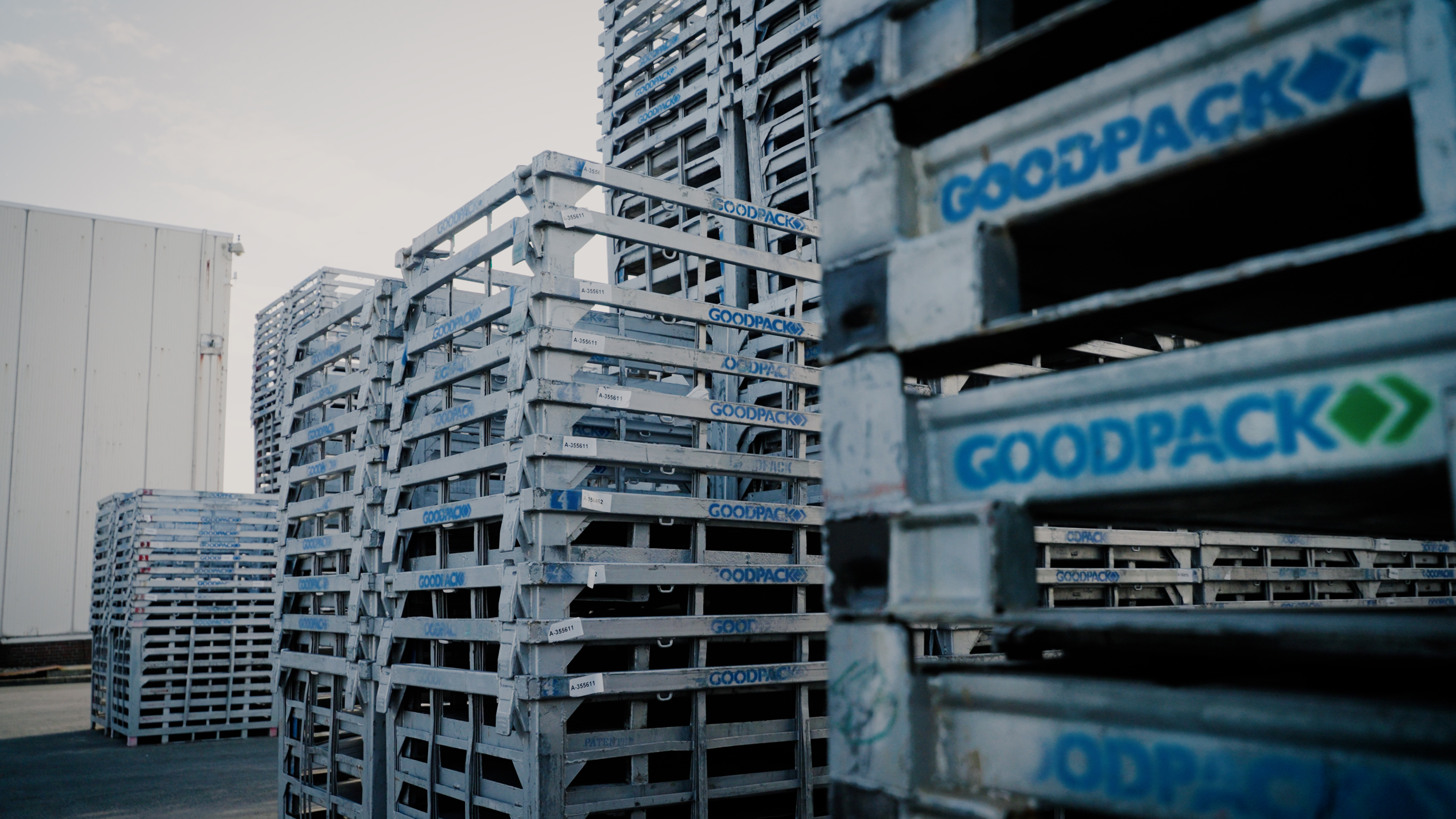
Goodpack operates the world's largest pool of reusable IBCs: 5.1 million containers in circulation, moving through more than 5,000 delivery and collection points across 73 countries, in a cycle running continuously for more than 30 years. The containers themselves are engineered for the economics of that cycle. The collapsible design of the MB5, the workhorse of the fleet, also supports more efficient storage and repositioning of empty containers.
For organizations seeking reusable IBC packaging solution without investing in and managing a dedicated fleet, pooling can help address several of these barriers. Access to a shared fleet reduces the need for upfront investment in owned assets, while Goodpack's network of delivery and collection points supports container recovery and redistribution across the markets it serves.
Getting Started: What Industrial Operations Should Look For
The decision to adopt a sustainable industrial container solution does not require a leap. It begins with three assessments most operations can run with information they already hold.
- Audit Current Packaging Use: Map the formats in use across each lane, what they cost per shipment once disposal, damage, and administration are included, and where waste is actually generated. This analysis can help determine where a pooled network may offer operational or cost advantages.
- Match Format to Payload and Corridor: Bulk liquids, dry ingredients, and automotive components place different demands on a container, and a format that performs on a short domestic lane may behave very differently across a multimodal international corridor.
- Evaluate Ownership Against Leasing: The comparison belongs on total cost of ownership, not unit price, and should weigh capital commitment, fleet utilization, return logistics, storage footprint, and the internal capability required to keep an owned fleet in dependable condition. For most industrial operations, that analysis is where the case for a pooled network becomes concrete.
From Packaging Decision to Infrastructure Strategy
Sustainable supply chain packaging is both an operational and procurement consideration. At industrial scale, its effectiveness depends not only on the packaging material, but also on durability, utilization, reverse logistics and the systems that keep reusable assets in circulation.
As regulatory requirements and sustainability expectations continue to evolve, businesses have an opportunity to evaluate how their transport packaging can support greater resource efficiency across the supply chain. For organizations operating across complex or international routes, pooling can provide one approach to accessing reusable packaging while reducing the need to manage a dedicated fleet.
If your organization is weighing the shift from single-use formats or an owned fleet to a pooled model, start with the numbers: map your current packaging costs per lane, then speak with our team about what leasing IBC rentals from the Goodpack network would look like across those same corridors.


