

Why Customized Logistics Solutions are Essential for Agility
Beyond the Metal Box: Why Customized Logistics Solutions are Essential for Agility
In an increasingly fragmented global market, the traditional view of packaging as a static commodity is becoming an operational liability. True agility requires a transition toward intelligent logistics, where the transport module is precision-engineered to integrate seamlessly with the specific technical, safety, and environmental requirements of the payload. By moving beyond the limitations of standard containers, organizations can eliminate the hidden frictions that frequently lead to transit damage, regulatory delays, and inflated total costs. This shift toward customized logistics ensures that high-value assets move with the precision and speed required to thrive in a volatile trade environment.
The Strategic Value of Customized Logistics
Customized logistics frameworks transform the supply chain into a resilient, value-adding engine by aligning physical distribution with specific industrial requirements. This transition provides several critical advantages for modern enterprises:
- Tailored Fit for Cargo: Tailoring the transport module to the specific dimensions of the cargo removes the void space that leads to internal shifting. This precision reduces the reliance on secondary dunnage while ensuring seamless integration with automated loading systems.
- Operational Resilience: Custom-engineered solutions allow businesses to better navigate systemic disruptions, such as labor shortages or port congestion. Having packaging designed for volatile scenarios ensures that the supply chain remains functional even when standard trucking and transport corridors are restricted.
- Enhanced Reliability and Quality Assurance: Building transport solutions around the unique needs of a product, whether high-viscosity liquids or sensitive automotive parts, minimizes the risk of structural failure. This leads to a verifiable record of safety that protects both the asset and the company's market reputation.
- Regulatory and Environmental Compliance: Optimized packaging naturally reduces the volume of single-use materials and industrial waste. By minimizing the weight and mass of the shipping unit, organizations can lower their environmental liability and improve their standing within eco-modulation frameworks.
Who Needs a Customizable Transport Solution?
While standard packaging may suffice for low-value commodities, customizable transport is a mandatory requirement for sectors where precision and compliance are non-negotiable. It’s the primary choice for organizations whose profitability depends on the absolute protection of valuable payloads:
- High-Value and Regulated Industries: Manufacturers of semiconductor equipment, powertrains, and specialty chemicals such as base oils and lubricants require packaging solutions that meet strict safety and quality standards, ensuring product integrity throughout transit.
- Enterprises with Global Distribution Footprints: Companies managing vast, international supply chains need standardized yet adaptable assets. This allows them to maintain consistent performance across diverse climates and varied regional regulatory environments.
- Agile Firms Experiencing Rapid Evolution: Businesses in high-growth phases or those that frequently pivot their product lines require packaging that scales with them. This avoids the financial lock-in of owning obsolete, inflexible transport fleets.
Goodpack: Not a Cookie-Cutter Solution
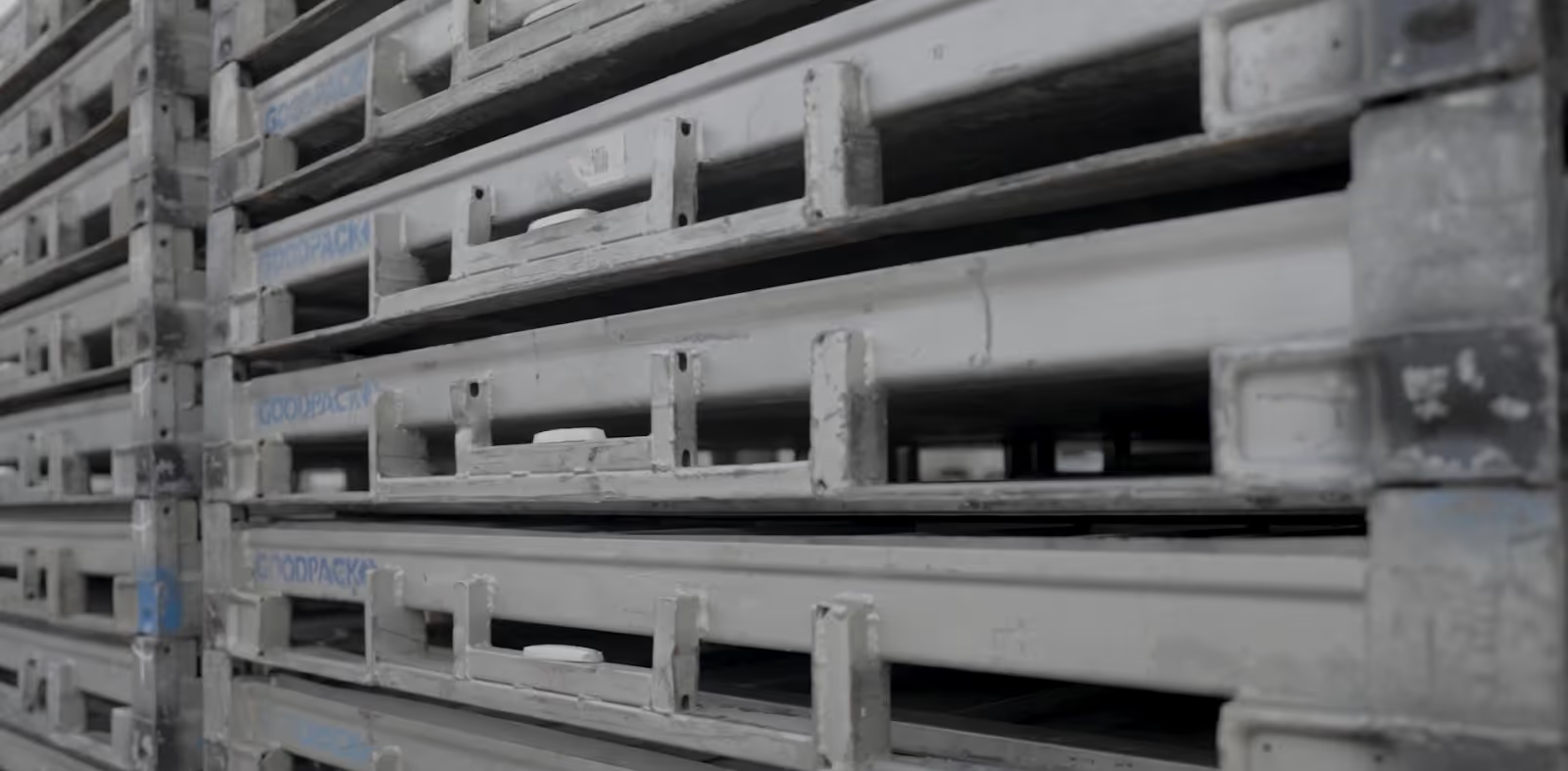
Goodpack has redefined the intermediate bulk container (IBC) category by shifting the industry focus from simple asset ownership to a comprehensive, service-driven ecosystem. As the operator of one of the world’s largest fleets of carbon-steel IBCs, we provide a sophisticated, durable alternative to conventional wood and plastic formats. Our mission is to provide the structural foundation and digital oversight necessary for the safe, sustainable movement of industrial goods.
Versatile Design and Specialized Components
We offer an extensive range of IBC packaging solutions, such as the MB5, MB6, MB9, and MB12 series, which are engineered to accommodate specific payload densities and viscosities. Whether serving as a robust liquid bulk container or a secure module for solid goods, these containers utilize high-strength galvanized steel frames to provide a durable, hard shell of protection, while featuring modular access points like half-doors and specialized closures. These accommodations support versatile loading workflows, including bottom-filling and discharge capabilities that are essential for high-viscosity juice concentrates and industrial additives.
To ensure absolute physical safety and security, each unit is equipped with integrated locking features that shield the cargo from external puncture forces. Recognizing that every application has unique requirements, Goodpack facilitates connections with specialized third-party partners. This allows clients to integrate custom-fitted liners, valves, and specialized fitments into our steel frames, creating a hybridized solution that ensures total operational and compatibility for every shipment.
Leasing Model Designed for Business Growth
Goodpack’s leasing model is specifically designed to eliminate the rigidity of traditional packaging procurement, allowing businesses to scale or pivot their operations without the burden of heavy capital expenditure (CAPEX). By utilizing an IBC rental approach, organizations can preserve their capital for core reinvestment in research, development, and market expansion. This financial flexibility ensures that the logistics budget remains aligned with actual usage, rather than being tied up in a fleet of idle or underutilized containers.
The leasing structure serves as a critical buffer for operational volume, allowing firms to increase their container supply instantly to meet seasonal surges or respond to shocks from transport disruptions. This flexibility is essential for maintaining continuity during periods of port congestion or regional instability, where access to additional assets can be the difference between meeting a deadline and a total production stoppage. It’s a financial model built for the reality of modern commerce, where agility is a primary currency.
Leveraging Global Network and Expertise
Our expansive operational footprint includes a presence in over 70 countries and a network of 5,000 global delivery and collection points. This massive scale allows for a highly decentralized logistics strategy, significantly reducing a company’s dependence on a few narrow transport corridors. By diversifying the points of entry and recovery, businesses can cultivate a much more resilient supply chain that’s capable of withstanding localized infrastructure failures or regional geopolitical shifts.
This infrastructure simplifies the complexities of global logistics by managing the entire container recovery and return process on behalf of the client. By removing the administrative burden of reverse logistics, we allow your teams to focus entirely on their core competencies and production goals. Our global network ensures that standardized, high-quality containers are always available near your points of origin, regardless of how far your final destination may be.
Securing Your Future Through Strategic Partnership
Navigating the complexities of high-value, global logistics requires moving past the procurement of basic boxes and choosing a partner capable of delivering a suite of truly tailored services and solutions. Successful organizations understand that structural durability, financial flexibility, and global reach must be managed as a single, integrated priority. By adopting Goodpack’s non-cookie-cutter approach, you gain the agility to adapt to market shifts while ensuring your most valuable assets are protected by the industry’s most resilient infrastructure. Embracing this strategic framework is the most effective way to ensure your supply chain is not only compliant and waste-free but also perfectly optimized for continuous, global growth.


