

How to Ship Liquids: A Guide to Juice Concentrate Logistics
Learn how to safely ship juice concentrates while maintaining product integrity. Discover how to mitigate liquid contamination, temperature and vibration risks.
How to Ship Liquids: A Guide to Juice Concentrate Logistics
Determining how to safely ship juice concentrates and shelf-stable juices requires a specialized logistics strategy that ensures product integrity remains uncompromised from source to destination. Unlike static dry goods, these liquid food products are exceptionally dynamic and highly susceptible to "invisible" environmental stressors, such as minute temperature fluctuations and microscopic contaminants.
Operational success depends on structured processes, engineered packaging, and asset visibility that support stable movement across complex global supply chains. This guide explores the key considerations involved in managing bulk liquid logistics while maintaining reliability, efficiency, and product integrity.
Critical Considerations for Liquid Food Transport
Understanding that one cannot treat these assets as standard cargo is the first step in recognizing the complexity of liquid logistics. Knowing how you can safely send bulk quantities necessitates a deep understanding of the chemical and biological vulnerabilities inherent in fluid payloads.
Managing Contamination Risk in Bulk Liquid Food Transport
Bulk liquid food products require controlled handling and secure containment throughout its entire logistics cycle. Because bulk liquid food products are highly sensitive, any instance of residual material, improper discharge, or compromised liners can affect product integrity, leading to costly regulatory breaches, product recalls, and significant disruptions to supply chain performance.
Mitigating these risks requires a shift from reactive measures to integrated containment solutions. Effective risk management is supported by the use of dedicated liners, sealed discharge systems, and standardized transfer processes that help reduce cross-contact between shipments. By standardizing these transfer processes and minimizing unnecessary manual intervention during loading and unloading, businesses can enforce a closed-loop environment that maintains quality standards consistency and protect product quality.
Precision Temperature Management in Cold Chain Logistics
Maintaining precise temperature control is critical in the transport of temperature-sensitive liquid food products, particularly high-degree concentrates that require sub-zero dispatch environments. The sensitivity of these fluids can vary significantly between colored and colorless concentrates, yet both are highly susceptible to degradation. Even brief exposure to temperature fluctuations during loading or transit can affect product characteristics, compromising the sensory profile and overall quality of the shipment.
A robust cold-chain strategy must therefore look beyond simple refrigeration to address the entire logistics ecosystem. This includes the integration of high-performance structural containment, secure liner systems, and disciplined handling practices that collectively act as a thermal barrier. By minimizing unnecessary exposure during critical transfer and ensuring consistent performance of the containment unit, businesses can shield their products from ambient heat gain, effectively preserving product integrity across long-distance transit.
When this physical durability is paired with controlled temperature management, the supply chain transitions from a point of vulnerability to a resilient strategic asset. This synergy not only reduces avoidable product loss, but also ensures consistent quality standards are maintained from origin to destination.
Managing Structural Stability During Transit
The transport of bulk liquid food products presents unique physical challenges, as these dynamic loads are sensitive to mechanical stress. During transit, the surge and ebb of fluids, coupled with the impact forces of long-distance hauling, may compromise product consistency or cause mechanical fatigue in the packaging, particularly in high-volume shipments navigating complex global routes.
To mitigate these risks, packaging must provide structural stability and controlled load distribution throughout the journey. This is achieved through the integration of reinforced containment frames and secure stacking systems that act as a rigid exoskeleton for the fluid cargo. When these units are paired with stable pallet configurations, they effectively dampen excessive movement and resist the lateral forces encountered during sea, rail, or road transport.
By minimizing structural stress at the containment level, businesses ensure the product arrives in a state that is optimized for efficient downstream processing and packaging operations.
Standard Procedures: Packing and Shipping Juice Concentrates
Transporting juice concentrates requires structured containment and disciplined handling practices to maintain product integrity throughout the logistics cycle. Understanding how to ship high-value liquids ensures that you can execute every step of the packing process with the precision required to keep the payload untouched by outside forces:
- The Primary Seal: The utilization of high-integrity closures is paramount for obstructing oxygen ingress, a primary driver of oxidation, while simultaneously preventing leaks that can instantly compromise the total value of the shipment.
- Multi-Layered Protection: Secondary waterproof barriers serve as a critical defense layer, shielding the liquid payload from external moisture and airborne environmental contaminants that might otherwise penetrate or degrade the primary lining.
- Cushioning and Stability: Implementing strategic dunnage and internal bracing is necessary to mitigate fluid sloshing and absorb the mechanical shocks inherent in maritime and road transit, thereby maintaining the product's integrity.
- Compliance Labeling: Explicit markings, such as "This Side Up" indicators, ensure the cargo is managed in accordance with international safety protocols and handled with the requisite care across the entire global distribution network.
Streamline Your Supply Chain with Goodpack
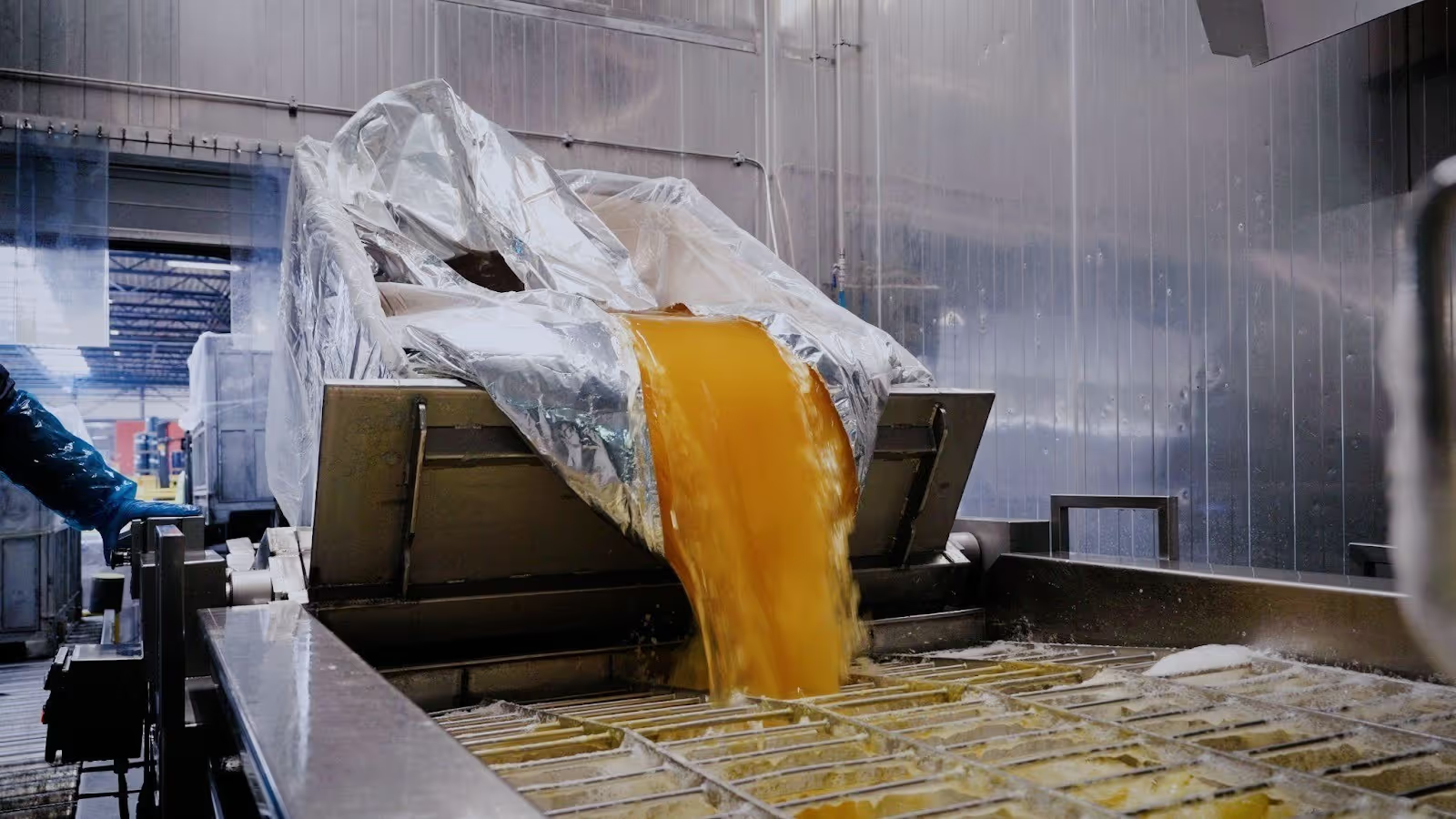
Goodpack’s reusable intermediate bulk container solution represents the best way to ship bulk liquid food products, as it addresses the complex requirements of how to manage liquid logistics while eliminating the significant operational friction inherent in traditional juice transport. By utilizing a reusable, pooled model, organizations can bypass the high costs and logistical complexity associated with internal cleaning, sterilization, and rigorous sanitization between transit cycles. This asset-light approach allows manufacturers to focus on product quality rather than container maintenance, ensuring that a pristine transport module is available on demand while significantly reducing the total cost of ownership.
The system's structural foundation rests on a robust, galvanized steel frame that serves as a rigid shield for the liquid payloads within. While the steel construction provides defense against external puncture and crush forces, the internal environment is managed through high-quality aseptic liners. These liners are typically procured from specialized third-party partners, allowing for a tailored fit based on the specific viscosity requirements of the juice. This combination of an unyielding exterior and a specialized interior significantly reduces the risk of spills or contamination, even during the most challenging long-haul voyages.
This material advantage extends directly into temperature-controlled environments, where Goodpack’s galvanized steel IBCs maintain structural stability in chilled and sub-zero conditions. By facilitating a direct heat transfer between the product and its environment without the moisture retention risks inherent in plastic or wood alternatives, these IBCs support the rapid and uniform cooling necessary to preserve the concentrate's composition. By providing a stable structural core that does not become brittle at freezing temperatures, Goodpack’s reusable IBCs empower businesses to handle temperature-sensitive products safely across storage and transit stages.
Beyond thermal and structural stability, further operational advantages are realized through functional design choices, such as a specialized lid that creates a secure physical seal against light exposure and environmental contaminants. To handle the unique challenges of high-viscosity juice concentrates, the system supports both bottom-filling and discharge configurations, facilitating an efficient and residue-free emptying process. With a global operational footprint spanning 73 countries and the integration of advanced digital tracking, this solution provides the container availability and visibility required to support a disciplined, high-reliability logistics strategy for high-value liquid food products.
Securing the Future of Liquid Logistics
Successful logistics for juice concentrates demand a proactive, control-driven approach that emphasizes stability, containment, and consistent handling throughout the supply chain. Transitioning from traditional, less durable packaging to a standardized, IBC rental solution represents a strategic move toward reducing the total cost of ownership while significantly minimizing industrial waste and improving asset utilization.
By combining structural durability with digital visibility and lifecycle accountability, businesses can strengthen supply chain reliability and support a more resilient, efficient future for liquid food distribution.
References
Jia, X., Li, S., Li, B., Zhang, L., Ding, Q., Gao, P., & Zhu, Z. (2022). Research Status and Prospect for Vibration, Noise and Temperature Rise-Based Effect of Food Transport Pumps on the Characteristics of Liquid Foods. Frontiers in Nutrition, 9, 884835–884835. https://doi.org/10.3389/fnut.2022.884835


