Back arrow

Building Resilience: How to Achieve Supply Chain Flexibility

Build a resilient supply chain that pivots with precision. Discover how to achieve supply chain flexibility through Goodpack’s standardized IBC pooling.

In the current global economic landscape, supply chain flexibility has evolved from a secondary operational goal into a primary strategic imperative. It represents an organization’s innate ability to pivot with precision in response to sudden market volatility, unforeseen logistical disruptions, and the increasingly erratic nature of consumer demand patterns.

For modern enterprises, this agility is the cornerstone of risk mitigation, allowing them to sustain a competitive edge and protect profitability even when faced with extreme external pressures. By shifting from a rigid, reactive posture to a fluid and proactive architecture, businesses can ensure their logistics networks possess the structural elasticity to bend under stress without suffering a total break. Realizing this degree of elasticity requires the integration of standardized, scalable solutions that remove the friction of asset ownership. By partnering with global pooling leaders like Goodpack, businesses can bridge the gap between existing rigidities and the agile, responsive supply chain of the future.

Why is a Flexible Supply Chain Important for Business Success?

Achieving a high degree of supply chain flexibility is essential for maintaining long-term business viability in a world where economic and logistical conditions can shift overnight. It provides the operational buffer necessary to navigate complexity without compromising service levels or financial stability.

  • Readiness for Change: A flexible infrastructure empowers businesses to integrate new environmental regulations and emerging market trends almost instantaneously. By avoiding the cost-prohibitive overhauls associated with legacy systems, companies can implement rapid adjustments that are both economically efficient and strategically sound.
  • Mitigating Disruptions: Agile logistics frameworks are designed to absorb systemic shocks, such as sudden port closures or geopolitical instability, with minimal friction. This capability significantly reduces potential liabilities, ensures the continuity of critical services, and safeguards the organization's reputation during times of crisis.
  • Increased Efficient Operations: Flexibility naturally eliminates systemic bottlenecks by allowing for the dynamic redeployment of resources across the entire value chain. This streamlining effect improves overall asset utilization and ensures that logistical efforts are always focused where they can generate the most significant impact.
  • Optimized Inventory Management: The capacity to rapidly scale transport and production volumes serves as a vital safeguard against both stockouts and the financial burden of excess inventory. This balanced approach minimizes carrying costs while ensuring that the organization can reliably fulfill demand spikes as they occur.
  • Ease of Scaling: Flexible logistics models allow businesses to capitalize on rapid growth or seasonal peaks without the need for massive, fixed capital investments. This "plug-and-play" scalability ensures that expansion is limited only by market opportunity rather than physical infrastructure constraints.

Key Factors Influencing Supply Chain Flexibility

The degree of flexibility an organization can achieve is determined by a variety of interconnected variables that span the entire movement of goods from source to destination. Understanding how these factors interact is critical for identifying the rigidities that hinder rapid adaptation and establishing a reliable way to measure supply chain risk:

  • Demand Variability: Unpredictable spikes and dips in customer behavior place immense strain on rigid logistics frameworks. Without the capacity to scale, organizations often face the dual risks of severe stockouts during peak demand or costly overstocking when interest wanes, both of which erode profit margins and customer trust.
  • Supplier Fragility: Over-reliance on a narrow or geographically concentrated supplier base creates critical single points of failure. When primary sources encounter disruptions, a lack of alternative sourcing options can lead to total production halts, leaving the organization unable to fulfill its market obligations.
  • Production Rigidity: Manufacturing processes optimized for high-volume, static output often lack the elasticity to pivot during market shifts. Lengthy retooling periods and high changeover costs mean that any sudden need for product variation results in significant downtime and the risk of producing obsolete inventory.
  • Technological Gaps: The absence of integrated digital tools creates informational silos that obscure real-time supply chain performance. Without advanced analytics and visibility, organizations operate with significant "blind spots," leading to delayed responses to disruptions and an inability to coordinate effectively across global networks.

Goodpack: The Strategic Approach to Improve Supply Chain Flexibility

Transitioning from theoretical agility to operational reality requires a partner capable of removing the friction inherent in traditional logistics. Goodpack provides this foundational layer of flexibility by replacing fixed-asset burdens with a dynamic, service-based ecosystem. This approach allows businesses to optimize their physical movement of goods without being restricted by a rigid, owned asset base.

Standardizing Packaging for Operational Flow

To achieve a truly seamless operational flow, organizations must eliminate the fragmentation caused by non-standard packaging units across their global networks. Standardizing around a modular footprint minimizes handling errors, accelerates loading and unloading times, and ensures perfect compatibility with modern automated warehouse systems.

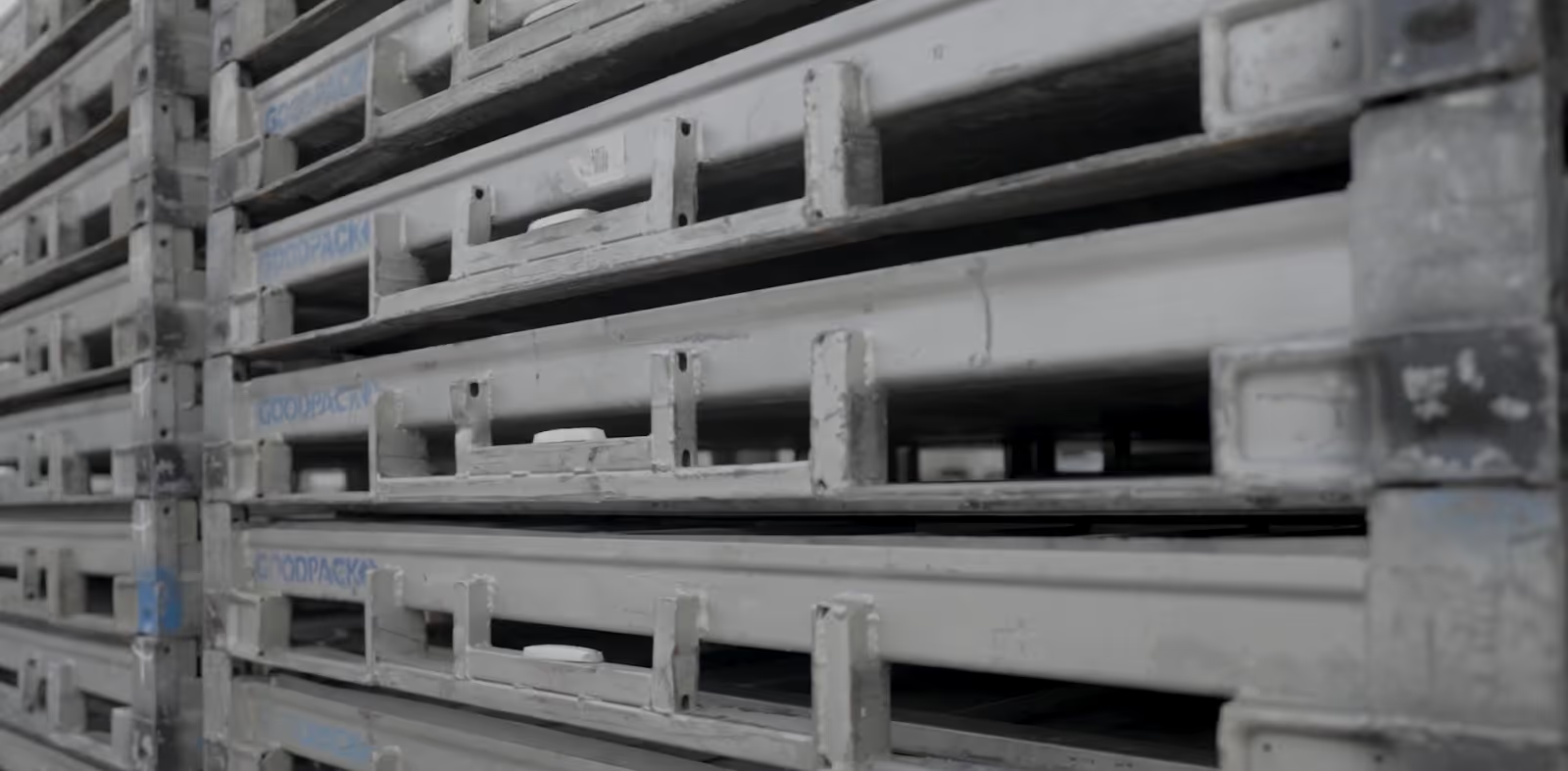
Goodpack’s standardized IBC containers are engineered to meet these evolving needs, offering a universal solution that supports long-term growth across diverse product lines and geographic regions. By adopting this uniform approach, companies can maximize their container utilization and ensure that every logistics partner in their chain operates with absolute consistency. This alignment transforms packaging from a logistical variable into a predictable, high-performance asset that enhances the entire supply chain.

Leveraging Our Global Pooling System for Agility

While standardization provides the foundation for operational flow, true agility is realized when organizations transition from restrictive, long-term contracts toward modular, leasing logistics models. Goodpack’s IBC rental system supports this agile philosophy by providing a reusable container fleet that scales in direct alignment with actual market usage, effectively eliminating the financial burden of idle assets. This pooling model simplifies the complexities of overseas logistics by offering a ready-to-use infrastructure that streamlines global exports while minimizing resource waste.

By leveraging an expansive network of 5,000 global delivery and collection points, organizations can efficiently manage container circulation and returns, ensuring the logistics chain remains both sustainable and cost-efficient. Moreover, businesses can scale their packaging requirements according to demand fluctuations, avoiding the burden of significant capital expenditure and fixed asset ownership.

Deploying Digital Assets for Better Visibility

Physical agility, however, is only as effective as the data driving it. In an increasingly complex global network, leveraging sophisticated digital tools is essential for coordinating assets and enabling the rapid decision-making required to navigate unforeseen bottlenecks. Goodpack utilizes advanced digital platforms to provide logistics leaders with actionable data regarding inventory levels and asset returns,. By integrating RFID technology into our containers, we provide the visibility necessary to monitor container status from the point of departure to the final destination. This level of transparency allows for early intervention when delays occur, ensuring that transit times are optimized and the integrity of the payload is never compromised.

Achieving Resilience Through Circularity

The path to true supply chain resilience lies in adopting proactive, flexible strategies that anticipate change rather than merely reacting to it. By harmonizing agile logistics models with advanced digital oversight and standardized, reusable intermediate bulk container solution, organizations build a foundation that thrives amid uncertainty. Transitioning from the limitations of rigid ownership to a circular, pooled model secures long-term competitiveness and provides the structural agility required to navigate the global value chain.

发布于
March 30, 2026